Mexican Talavera and Portuguese Azulejo: A Comparative Insight into Traditional Ceramic Tile Patterns
Traditional ceramic tiles have long served as a canvas for cultural expression, storytelling, and architectural beauty. Among the most revered styles are Mexican Talavera and Portuguese Azulejo—two distinct yet similarly rich traditions that showcase the artistry of their respective regions. These tile patterns not only enrich the visual appeal of spaces but also carry historical significance and symbolic meaning. This article explores the unique characteristics, advantages, and applications of Mexican Talavera and Portuguese Azulejo tiles, offering practical insights for professionals, designers, and enthusiasts alike.
The Origins and Cultural Significance of Talavera and Azulejo Tiles
Mexican Talavera is a type of majolica pottery that originated in Spain during the Moorish era and was later introduced to Mexico by Spanish colonizers. The craft flourished in Puebla, where it developed its own identity through local adaptations. Today, Talavera is recognized as an emblem of Mexican heritage, often associated with vibrant colors, floral motifs, and intricate designs.
Meanwhile, Portuguese Azulejo has roots in 13th-century Islamic Spain (Al-Andalus), where glazed ceramic tiles were used extensively in architecture. The tradition was adopted and refined in Portugal, becoming a defining feature of the country’s buildings—from churches and palaces to humble homes. Azulejos are celebrated for their detailed narratives, geometric precision, and use in creating large-scale decorative murals.
Both Talavera and Azulejo represent centuries of craftsmanship, yet they differ in form, function, and the stories they tell. Understanding these differences can help creators and consumers choose the right style for their projects while appreciating the deeper cultural meanings behind each piece.
Color Palette and Symbolism
Mexican Talavera is known for its bold and vivid color scheme, typically featuring combinations of blue, yellow, green, and red on a white background. These colors are not just aesthetic choices; they often symbolize elements of nature such as sky, sun, earth, and flowers. In contrast, Portuguese Azulejo uses a more subdued palette, dominated by deep blues and whites, with occasional touches of gold or other muted tones. The simplicity of this color scheme allows for intricate detailing and enhances the storytelling aspect of the design.
Patterns and Motifs
Talavera tiles frequently incorporate floral patterns, cobalt blue arabesques, and classical themes reminiscent of Renaissance and Baroque art. Each tile is hand-painted, which contributes to the uniqueness of every set. On the other hand, Azulejo tiles often depict entire scenes—historical events, religious iconography, or pastoral landscapes. These narrative panels are created using small, uniform pieces arranged like a mosaic to convey a broader message or theme.
Techniques and Craftsmanship
The production process for both Talavera and Azulejo tiles is labor-intensive and requires skilled artisans. Talavera involves shaping the clay, glazing, painting, and firing at high temperatures to create a durable and colorful finish. The result is a glossy surface with raised relief details that add texture and depth.
Azulejo tiles, particularly those from the 16th century onward, are made using a technique called tessellation, where individual ceramic squares are cut and assembled to form a cohesive image. Modern Azulejo may also use printed methods, but traditional handcrafted versions remain highly valued for their authenticity and fine detail.
Architectural Integration
In architectural settings, both Mexican Talavera and Portuguese Azulejo offer versatile applications. Talavera is commonly used in kitchens, bathrooms, and patios due to its durability and resistance to moisture. Its ornate designs make it ideal for adding a touch of warmth and character to domestic spaces.
Azulejo, with its ability to cover large surfaces cohesively, is frequently used in walls and façades. Iconic examples include the São Bento Monastery in Porto and the Belém Station in Lisbon, where entire rooms are transformed into visual masterpieces. For contemporary architects, Azulejo provides an opportunity to blend tradition with modern aesthetics, especially in public spaces and hospitality environments.
Interior Design and Decor
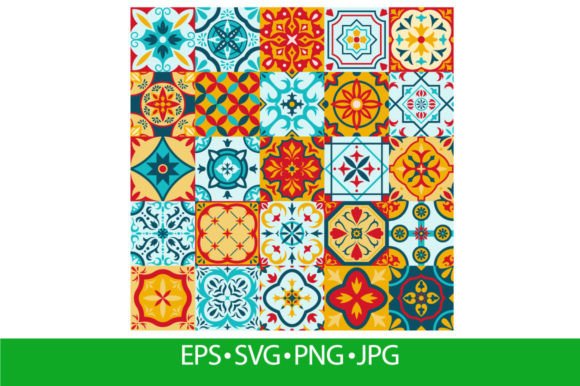
Decorative ethnic ornament ceramic tiles vector illustration sets, including patchwork folk pattern tiles, are increasingly popular in interior design. These digital assets allow designers to experiment with traditional patterns without the constraints of physical materials. They can be used in graphic design projects, website backgrounds, or even as inspiration for custom tile installations.
Mexican Talavera tiles are often employed in kitchen backsplashes, shower walls, and entryways. Their bright hues and classic shapes lend themselves well to eclectic, rustic, or Mediterranean-style interiors. Meanwhile, Azulejo tiles are favored for wall coverings, especially in living areas and dining spaces, where their storytelling quality can become a focal point.
Commercial and Retail Spaces
For business owners and retailers, both tile styles can serve as powerful branding tools. A restaurant or boutique adorned with Talavera tiles might evoke a sense of traditional Mexican charm, appealing to customers looking for a culturally immersive experience. Similarly, Azulejo can be used in cafes, hotels, or shops to reflect Portuguese heritage or European elegance.
Vector illustrations of these tiles in EPS, SVG, PNG, and JPG formats are invaluable for marketing materials, signage, and packaging. They provide flexibility in scaling and customization, enabling businesses to maintain a consistent aesthetic across different platforms and products.
Durability and Longevity
One of the primary advantages of both Talavera and Azulejo tiles is their durability. Made from high-quality clay and fired at high temperatures, these tiles are resistant to water, stains, and wear. This makes them suitable for high-traffic areas and environments where maintenance is a concern.
Cultural Authenticity and Value
These tiles carry a strong sense of place and history. Owning or displaying Talavera or Azulejo ceramics is not merely about decoration—it's about honoring centuries of craftsmanship and preserving cultural identity. Collectors and historians often seek out authentic pieces for their artistic and educational value.
Design Flexibility
Thanks to advancements in digital design, traditional ceramic tile patterns are now available as vector illustrations. These files support scalable use in various media, allowing for creative reinterpretations while maintaining the essence of the original style. Patchwork folk pattern tiles, for instance, can be mixed and matched to create one-of-a-kind layouts.
Eco-Friendly and Sustainable Materials
Both Talavera and Azulejo are crafted using natural materials and time-honored techniques. As sustainability becomes a key consideration in construction and design, choosing traditional ceramic tiles supports environmentally responsible practices and reduces reliance on mass-produced alternatives.
Matching Style with Context
When selecting between Talavera and Azulejo tiles, it's essential to consider the architectural and cultural context of the space. Talavera thrives in warm, tropical, or Latin American settings, while Azulejo complements European, coastal, or historic interiors. Mixing styles should be done thoughtfully to avoid clashing aesthetics.
Cost and Availability
Authentic Talavera and Azulejo tiles can be more expensive than standard ceramic options due to the manual labor involved. However, their timeless appeal and artisanal quality often justify the investment. Digital illustrations offer a cost-effective alternative for conceptual work, virtual presentations, or non-physical applications.
Installation Requirements
Due to their weight and fragility, traditional ceramic tiles require professional installation. Proper surface preparation, adhesive selection, and grouting are crucial to ensure longevity and visual harmony. Digital tile sets eliminate the need for physical installation, making them accessible for online content creation, e-commerce visuals, and design mockups.
Legal and Ethical Sourcing
As with any traditional craft, ethical sourcing is important. Authentic Talavera and Azulejo tiles should be produced by certified artisans who respect the heritage and standards of their trade. Supporting these communities helps sustain cultural practices and promotes fair labor conditions.
Modern Interpretations and Trends
In recent years, there has been a resurgence of interest in traditional ceramic tile patterns, driven by the popularity of global design trends and the rise of digital illustration tools. Artists and designers now combine the motifs of Talavera and Azulejo with contemporary styles, resulting in innovative hybrids that honor the past while embracing the future.
Vector illustration sets have played a significant role in this evolution. By providing editable, royalty-free, or customizable templates, they enable creators to integrate ethnic ornament patterns into logos, web headers, app interfaces, and print materials. Patchwork folk pattern tiles, for example, are being reimagined as modular components in modern home décor and fashion textiles.
Moreover, the availability of these patterns in multiple formats—EPS, SVG, PNG, and JPG—ensures compatibility across software and devices. Whether designing for a mobile app or a museum exhibit, having access to high-resolution and scalable images is essential for maintaining visual integrity.
Conclusion Through Application
To illustrate the versatility of these traditional styles, consider a designer working on a project for a Latin-themed café. By using a Mexican Talavera-inspired vector tile set, they can create a menu board background that reflects the café’s cultural roots. Alternatively, a luxury hotel in Lisbon might commission a custom Azulejo mural to highlight its connection to Portuguese history, using digital templates for initial planning before finalizing the physical artwork.
Similarly, educators and researchers can leverage digital illustrations to teach students about the symbolism and evolution of these tile styles. With easy access to downloadable resources, learning becomes more interactive and visually engaging.
Ultimately, whether you're an architect, a hobbyist, or a brand owner, Mexican Talavera and Portuguese Azulejo offer a wealth of inspiration and functionality. Their enduring beauty and adaptability ensure that they remain relevant in today’s design landscape, bridging the gap between tradition and innovation.